Pillows · A practical guide
Down Pillow Fill Power, Loft, and Support: What to Compare
A pillow’s label can sound like a verdict: 700 fill power, lofty construction, medium support. But the numbers describe only parts of the experience. How much down is inside, how the pillow is stitched, how large it is, and how you sleep all help determine whether it settles into a comfortable cradle or collapses into a rather expensive envelope.
There is a particular optimism involved in buying a pillow. We imagine a small, manageable improvement: a better morning, perhaps, or at least a night without repeatedly folding the same corner beneath our head. Down pillows invite especially high expectations. They are associated with softness, warmth, lightness, and the agreeable sensation of being received rather than merely supported. Yet the word “down” tells us little about the exact pillow we will meet at bedtime.
The label may give a fill-power figure, a firmness description, or a material list. Each can be useful. None, by itself, predicts the whole feel. Fill power is not a firmness scale, and a high-loft pillow is not automatically a supportive one. To make a sensible comparison, it helps to understand what the terms measure, what they leave out, and how a pillow behaves under the unglamorous but decisive weight of a sleeping head.
What fill power measures—and what it doesn’t
Fill power describes the volume occupied by a given weight of down under a standardized test. In broad terms, higher fill power means the down clusters loft more: a smaller weight of that fill can occupy more space. The figure is often presented as a badge of quality, and it can be useful when comparing down materials. But it is not a measure of firmness, height, or neck support.
Think of fill power as a description of the fill’s capacity to expand, not a promise about the finished pillow’s shape. A pillow with high-fill-power down can still feel soft and compressible if it contains a relatively small amount of fill. Another pillow with a lower figure may feel more substantial if it contains more material or has a construction that holds the fill in place. In other words, the number describes one ingredient; the pillow is the recipe.
Fill power also does not tell you how a pillow will feel after an hour of sleep. Down compresses under pressure, then tends to regain some loft when that pressure is removed. The degree and speed of that recovery depend on the fill, the amount used, the construction, and the pillow’s condition. A specification sheet can hint at this behavior, but it cannot fully reproduce the small nightly negotiations between head, neck, mattress, and pillow.
Loft is a starting height, not the whole story
Loft is the pillow’s height when it is uncompressed. The distinction matters because a pillow may look tall on a bed and become much flatter once you lie on it. A lofty pillow can therefore feel low after compression, while a pillow with a more modest initial height may retain a steadier profile. When a listing uses words such as “high loft” or “low profile,” ask whether it is describing the pillow at rest, its feel under pressure, or simply a general product category.
In a down pillow, loft is influenced by both fill power and fill amount. It is also affected by the dimensions of the pillow. The same weight of down spread across a larger shell may create a different profile from that amount in a smaller one. Stitching and internal compartments can help determine where the fill sits and whether it spreads evenly. Thus, “lofty” describes an impression, not an independent guarantee of lasting height.
Loft should be considered in relation to the space between your head and the mattress when you are lying in your usual position. A pillow’s job is not to keep the head elevated as high as possible. It is to offer a comfortable level of support that helps the head and neck rest in a natural, neutral position. Too much height can be as awkward as too little; the appropriate level depends partly on your body, sleeping posture, and mattress.
Support is about what happens under pressure
“Support” is a word with an impressive résumé in bedding descriptions. It can mean that a pillow stays plump, that it gently cushions the head, or that it is intended to help maintain alignment. These are related ideas, but they are not identical. A pillow that feels firm in your hands may compress substantially beneath your head. A soft pillow may still provide a useful cradle if it contains enough fill and responds well to movement.
It is helpful to distinguish surface softness from underlying support. Down often feels yielding at first contact. The clusters can shift and compress around the head, creating a plush sensation. Whether that sensation remains comfortable depends on how much the pillow settles and whether it continues to fill the space needed by your posture. Some sleepers like to reshape or fluff their pillow during the night; others would rather the pillow maintain a more consistent profile without intervention.
The choice is personal, but it need not be mysterious. Consider whether you prefer a pillow that gives way readily or one that resists compression. Consider whether you naturally bunch or fold your pillow, and whether you wake feeling that it has migrated away from the position you wanted. These observations are more useful than treating a single firmness word as a universal instruction.
Sleeping position changes the comparison
Sleeping position affects the distance the pillow needs to fill between the head and mattress. Side sleepers generally have a larger gap to accommodate than stomach sleepers, though shoulder width, mattress softness, and individual posture also matter. Back sleepers often need an in-between height, but personal anatomy and mattress feel can alter that calculation. These are practical tendencies, not rules that every body must obey.
- Side sleepers: Compare how much the pillow retains its height under pressure. A pillow that compresses too far may not maintain the elevation you find comfortable. The right feel will vary with shoulder width and how deeply the shoulder sinks into the mattress.
- Back sleepers: Look for a profile that cushions the head without pushing it forward. A plush pillow may work well if it does not collapse excessively; a very high pillow may feel intrusive.
- Stomach sleepers: Many prefer a lower, more compressible pillow, or sometimes no pillow beneath the head. The goal is not to add unnecessary height. Comfort is the guide, and persistent pain deserves attention beyond pillow shopping.
- Combination sleepers: If you change positions, consider how easily the pillow can be reshaped and whether it continues to feel comfortable as you move. A pillow that suits one posture perfectly may feel less accommodating in another.
Mattress firmness enters the picture quietly. On a softer mattress, the shoulder and torso may sink farther, changing the gap a pillow must bridge. On a firmer surface, the body may remain higher. That is one reason a pillow that felt right in a showroom or at a friend’s house may behave differently at home. Pillow choice is not an isolated decision; it is part of a small system that includes the sleeper and the surface beneath them.
Fill amount, dimensions, and construction
When comparing down pillows, look beyond the fill-power number to the amount of fill, if it is provided. A pillow with more down may feel fuller or hold a higher profile, though construction and shell dimensions still matter. Product descriptions do not always report fill weight in a consistent or easily comparable way, so it is worth reading the details carefully rather than assuming that a larger number in one field settles the question.
Dimensions also matter. A standard, queen, or king pillow can distribute its fill differently, and the pillowcase affects how freely the pillow can spread. A tightly fitted case may make a pillow feel more compact; a generous case may allow it to shift. If you already own pillowcases you plan to use, check that the pillow’s size is a practical match. The relation between shell and fill can change the feel more than a marketing adjective suggests.
Construction influences the pillow’s internal geography. A simple chamber allows fill to move more freely. A gusset—a band of fabric around the edge—can help the pillow retain a more substantial side profile. Baffle-box or chambered designs divide fill into sections, which may help limit migration and keep the pillow’s shape more consistent. The details are worth noting, but no construction method can guarantee that a particular pillow will suit every sleeper.
A pillow’s outer fabric matters, too. A tightly woven shell can help contain fine down clusters, while fabric weight and weave may influence the hand and breathability of the pillow. The shell is part of the sleep experience: it sits between the fill and the pillowcase, and it has to keep its contents where they belong. Look for clear information about fabric and care, especially if laundering convenience is important to you.
How to compare firmness descriptions
Soft, medium, and firm are not standardized measurements across every maker. They are useful as broad clues, but one company’s medium may not feel like another company’s medium. A description may also refer to how much fill is inside rather than how resistant the pillow feels beneath the head. If the seller provides more detail—fill weight, construction, or a clear explanation of the rating—use it to interpret the label.
A good comparison starts by identifying what you want the pillow to do. If you enjoy a pillow that can be compressed and molded, softness and easy reshaping may be priorities. If you want a more stable surface, investigate fill amount and chamber construction, and look for information about how the pillow maintains its profile. Neither preference is inherently superior. The useful question is whether the pillow’s behavior fits your sleep habits.
For example, a down pillow described as light and lofty may be designed to compress gently rather than to hold a rigid shape. The Down Pillow is described as using responsibly sourced, double-washed down in a down-proof organic cotton shell, with a light feel that compresses under the head. Its care guidance specifies a cold, gentle machine wash and low-heat tumble drying. Those are concrete details to compare; they do not, by themselves, establish that it is the right pillow for a particular person.
Care, cleaning, and the less glamorous label details
A pillow is an object of nightly use, which makes care instructions more than fine print. Some down pillows can be machine washed; others require professional or specialized care. Even when a pillow is washable, its shell, stitching, and fill need to be dried thoroughly according to the maker’s directions. Damp fill can clump and may not recover its intended loft. Before buying, consider whether the recommended maintenance fits your household and your laundry setup.
A removable, washable pillow protector can help shield the pillow from everyday moisture, oils, and dust. It is not a substitute for cleaning when cleaning is needed, but it may reduce how often the pillow itself requires attention. Pillowcases should also be laundered regularly. These are ordinary habits, not a promise of allergy prevention or a replacement for individualized advice when someone has a diagnosed allergy or another health concern.
Down sourcing is another meaningful point of comparison. Look for specific, verifiable information about where the down comes from and whether a recognized standard or certification applies. A phrase such as “responsibly sourced” is informative only to the extent that a maker explains what it means and how the claim is supported. If animal welfare is important to you, read the sourcing details rather than relying on a general label alone.
The word “hypoallergenic” also deserves a careful reading. It may refer to processing or a product’s stated characteristics, but it does not mean that an individual cannot react to it. People with sensitivities should review the complete material information and seek medical guidance when appropriate. A pillow’s fill, shell, detergent residue, and surrounding bedding can all be relevant to comfort, and no single adjective can settle the matter.
A practical checklist before you choose
Before settling on a down pillow, gather the details that describe both the materials and the likely experience. A concise checklist can prevent the fill-power figure from doing more work than it should.
- What is the fill power, and is it clearly presented as a measure of down volume rather than firmness?
- Is the amount of fill or the fill weight given?
- What are the pillow’s dimensions, and do they suit your pillowcase?
- Does the design use a gusset, baffles, or separate chambers to manage shape and fill distribution?
- Do you want a pillow that compresses easily, or one that maintains a steadier profile?
- How does your preferred sleeping position affect the height you find comfortable?
- What are the care instructions, and can you follow them reliably?
- Is the sourcing information specific enough to help you assess the product’s claims?
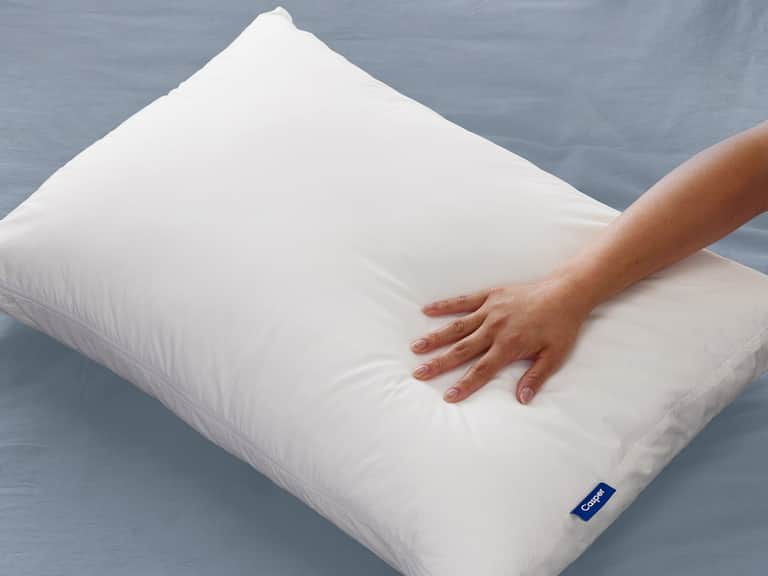
If you can test a pillow, take a few minutes to try it in your usual position. Do not judge only by how it feels when squeezed in a hand; that test tells you little about how it behaves under your head. Notice whether the pillow sinks gradually, whether it can be reshaped, and whether its height feels comfortable against your mattress. If you are shopping online, look for a clear return policy and enough product information to make a considered choice.
Common misunderstandings about down pillows
“Higher fill power means firmer support.” Not necessarily. Higher fill power describes the volume of down relative to its weight. The pillow’s firmness and support depend on additional factors, including fill amount, construction, dimensions, and how much the fill compresses.
“A lofty pillow will stay tall all night.” Initial height is not the same as retained height under pressure. Down is designed to be compressible. Consider the pillow’s behavior beneath the head, not only its appearance when fluffed on the bed.
“One firmness is best for everyone in a sleep position.” Sleeping position offers a useful starting point, but body proportions, mattress feel, movement, and personal preference vary. A side sleeper and another side sleeper may need different pillow heights to feel comfortable.
“Natural fill automatically means easy care.” Materials vary. Some pillows have washable outer covers, while their fills require spot cleaning or careful drying. Check the instructions for the complete pillow, not only the cover.
The useful question is how it settles
A pillow is rarely impressive in the abstract. Its merits are revealed in the small physical facts of a night: whether it holds a comfortable height, whether it can be adjusted without ceremony, whether it feels too warm, and whether its upkeep seems reasonable after the novelty has worn off. Fill power can help explain the material, but it cannot supply those answers by itself.
The most useful comparison is therefore a layered one. Start with fill power, then check fill amount, loft, size, and construction. Relate those details to your sleeping position and the feel of your mattress. Finally, consider care and sourcing, because a pillow is not merely a sensation but a household object that must be cleaned, protected, and kept in use.
This approach may lack the tidy certainty of a single “best” number. It has the advantage of being true to the way pillows work. A down pillow is a collection of materials and decisions, and the label is its introduction, not its biography. The right one is not necessarily the tallest, softest, or most expensive. It is the one whose support, compression, and maintenance make sense for the person who will spend the night on it.
This guide is for general educational purposes. Pillow comfort is individual; persistent pain, numbness, or other sleep-related symptoms should be discussed with a qualified health professional.